
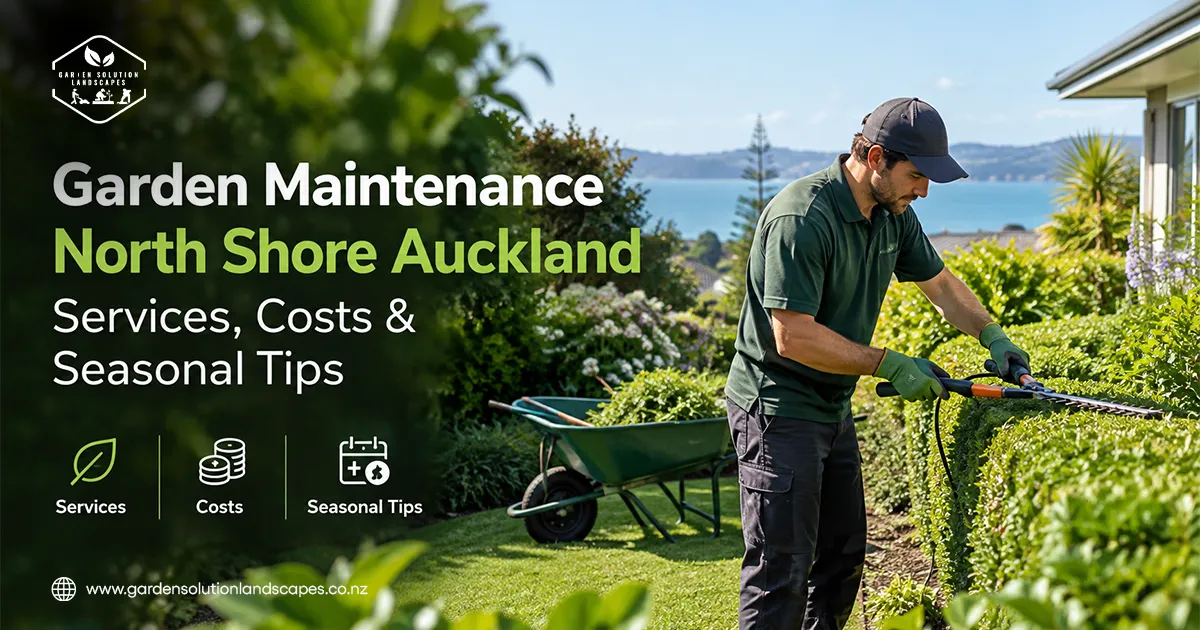
Garden Maintenance North Shore Auckland: Services, Costs & Seasonal Tips
By Garden SolutionPosted on Posted in UncategorizedNo Comments on Garden Maintenance North Shore Auckland: Services, Costs & Seasonal Tips
Keeping your yard healthy on the North Shore takes regular work. Fast plant growth, heavy clay soil and salty coastal weather vary from suburb to suburb and make garden care tricky. Between trimming hedges, pulling weeds, fixing hard lawns, and clearing drains, outdoor upkeep quickly consumes free time. Understanding garden maintenance in North Shore properties helps you manage seasonal chores before small tasks turn into major cleanups. Read this guide to learn what standard garden care includes, what local professionals charge, and how to manage clay soil and growth year-round.
Garden maintenance North Shore: what's included?
| Service | What it covers | How often |
|---|---|---|
|
Lawn mowing and edging
|
Mowing, trimming edges, blowing paths clean
|
Weekly in summer, every 2 to 3 weeks in winter
|
|
Hedge trimming
|
Shaping hedges and keeping them off paths and fences
|
Twice a year, more for fast hedges.
|
|
Pruning
|
Cutting back shrubs, roses, and fruit trees
|
Mostly winter, or after flowering
|
|
Weeding
|
Pulling or spraying weeds in beds and paths
|
Every visit
|
|
Mulching
|
Spreading bark or compost over garden beds
|
Once or twice a year
|
|
Planting
|
New plants, natives, and hedges
|
Mainly autumn and spring
|
|
Green waste removal
|
Taking away clippings and branches
|
After each visit, or as needed
|
|
Garden clean-ups
|
A full tidy of an overgrown garden
|
One-off
|
How much does garden maintenance cost on the North Shore?
Most Auckland gardeners charge about $60 to $75 an hour for general garden work. Lawn mowing for a small section starts at around $30 to $35 a visit. Green waste removal often costs about $25 for each 1 m³ bag. However, tall hedges, steep sections and overgrown gardens usually need a quote after a site visit.
| Job | Typical Auckland price |
|---|---|
|
General garden maintenance
|
About $60 to $75 per hour
|
|
Small lawn mow
|
From about $30 to $35 per visit
|
|
Hedge trimming
|
About $70 per hour, tall hedges by quote
|
|
Green waste removal
|
About $25 per 1 m³ bag
|
|
Regular monthly plan
|
Some gardeners offer 4 hours a month from about $150 plus GST
|
A few things change the price:
- The size of your section, and how steep it is.
- The amount of overgrowth on the first visit.
- Access, such as narrow side paths or no parking.
- If you already have a green waste bin.
Regular visits also cost less over time. Each visit takes less work, because the gardener keeps things tidy instead of fixing a big mess.
Seasonal garden maintenance calendar for the North Shore
On the North Shore, you feed, mulch and trim hedges for the first time in spring. In summer, you water deeply and mow every week. Then in autumn, you plant. Finally, in winter, you prune roses and fruit trees and fix drainage.
Spring (September to November)
Kikuyu, a tough grass, covers many North Shore lawns and grows fast once the soil warms up. So feed your lawn with a slow-release fertilizer in September or October, when you see new growth.
Also, spread mulch in spring, when it does the most good. To do it well:
- First, pull out all the weeds, roots, and all.
- Then water the soil well, because mulch on dry soil just keeps it dry.
- Next, spread bark or compost mulch 50 to 75 mm deep.
- Finally, keep the mulch about 5 cm away from stems and trunks so they don’t rot.
Trim hedges for the first time in late spring. But check for bird nests first, and wait a few weeks if you find one.
Summer (December to February)
In summer, water deeply once or twice a week instead of a little every day. Deep watering sends roots further down, so plants cope better in dry weather. Water early in the morning too, because the sun and wind take less of it then.
Mow kikuyu every week at 25 to 40 mm. However, never cut off more than a third of the grass at once, or the lawn turns brown. Then in late summer, give hedges a second, lighter trim.
Autumn (March to May)
Plant new trees, shrubs and natives in autumn. At this time of year, the soil still holds summer warmth and the rain starts to return. As a result, new roots settle well before the next summer. Also, feed your lawn again in early autumn.
While you’re outside, look for moth plants on fences and hedges. This weed has green pods that look like small chokos. In autumn, the pods split open and release thousands of seeds. So pull out the vine, bag the pods and put them in the rubbish, not the compost.
Winter (June to August)
Prune roses and fruit trees that lose their leaves in July, while they rest. Winter also shows you where clay soil holds too much water. For example, if water sits on your lawn for days after rain, you need better drainage or raised beds. On dry days, plan and dig new garden beds.
Garden maintenance tips for different North Shore gardens
Coastal gardens
Takapuna and East Coast Bays gardens need plants that can handle salt and wind. Pōhutukawa, flax, taupata and karo are good choices. Add compost to sandy soil and rinse young plants after strong coastal winds.
Gardens near native bush and kauri
If your garden is near Kauri, avoid digging or using heavy machinery around their roots. Clean soil from your boots and tools before and after working nearby, and keep invasive weeds away from bush edges.
Clay soil on new sections
Clay soil can become very wet in winter and hard in summer. Add compost and mulch each year, and avoid digging when the soil is wet. Aerating new lawns can also improve drainage and root growth.
Small gardens and courtyards
For small gardens, use pots and low-maintenance plants such as flax, coprosma and renga renga lily. Use potting mix in containers and check them regularly in summer, as pots dry out quickly.
Sloping sections
Sloping gardens can lose soil during heavy rain. Low terraces, edging and a good layer of mulch can help slow water and protect the soil.
Older, overgrown gardens
Mature gardens often need regular hedge trimming, fresh mulch and occasional replanting. If a hedge has become too large, trim it back gradually rather than cutting it all at once.
Simple tips from North Shore gardeners
Experienced local gardeners use a few small habits that most guides leave out. None of them cost much. But together, they help your garden handle clay, salt, wind, and dry summers.
Plant fruit trees on a mound
Winter rain sits in clay, and roots that stay wet can rot. For this reason, Auckland Botanic Gardens grows its avocado trees on raised mounds. In flat clay, avocados often grow well for a year or two, then decline quickly. To plant on a mound:
- First, build a mound of good garden soil, about 60 cm high for avocados.
- Then plant the tree so the top of its roots is level with the top of the mound.
- Next, spread mulch over the mound, but leave a gap around the trunk.
- Finally, during dry spells, pull back the mulch and feel the soil to check if it needs water.
Add compost before summer, not during it
Dig compost in during autumn and winter, then cover it with thick mulch. The compost helps clay soak up rain and hold it. Meanwhile, the mulch stops the soil from drying out in summer.
Ask a local arborist for wood chips
Tree companies often pay to get rid of their wood chips. Because of this, many will drop off a load for free or a small fee. However, ask where the chips came from. Say no to any load from near kauri, since kauri dieback spreads through soil.
Use deep edging to keep kikuyu out of garden beds
Kikuyu spreads through runners, both on top of the soil and under it. A deep, solid edge between the lawn and the garden stops most of these runners. Then you can run a line trimmer along the edge to catch the rest.
Skip store-bought lawn seed for bare patches
Most bagged seed is a different grass, so the patch never matches a kikuyu lawn. Instead, let kikuyu runners fill the bare spots in summer, when they grow the fastest.
Look at your neighbours' gardens
The plants already growing well on your street show you what suits your suburb. For example, if the flax and karo next door look healthy, they will probably grow well for you too.
Garden waste and council rules
Most North Shore homes use a private garden waste bin or bag service. Others take green waste to a transfer station or recycling centre. However, fees and sites change, so check Auckland Council’s website for the closest one.
A few other rules also apply:
- Auckland Council lists some weeds, such as moth plant and woolly nightshade, as pest plants. Don’t compost them while they have seeds.
- Auckland Council protects some large trees. Check with the council before you remove a big tree, especially near a stream or in native bush.
- Kauri need extra care. Keep work away from their roots, and clean your boots and tools.
Should you do it yourself or hire a gardener?
Small, flat yards are easy to manage on your own in a few hours every two weeks. But steep slopes, large properties, tall hedges, poor drainage, and work around protected kauri trees quickly become unsafe and exhausting without the right tools and training.
When keeping up with your garden gets too tough, Garden Solutions Landscapes handles the heavy lifting for you. Setting up regular care keeps your yard looking sharp year-round, so you never have to deal with a massive, stressful cleanup again.
Need a hand with your garden? Get in touch with Garden Solutions Landscapes today to discuss your garden needs.
Frequently Asked Questions
Most gardeners on Auckland’s North Shore charge around $60 to $75 an hour for general garden maintenance. A basic lawn mow usually starts at about $30 to $35 per visit. Larger jobs, such as tall hedges, steep sections or overgrown gardens, may need a quote after seeing the property. Regular garden maintenance can also be more affordable than one-off clean-ups.
During late spring and summer, kikuyu lawns usually need mowing about once a week because they grow quickly. In winter, mowing every two to three weeks is often enough. Try not to cut more than one-third of the grass height at a time, as cutting too much can leave your lawn looking brown and stressed.
Late spring is a good time to trim hedges, with another trim in late summer or early autumn if needed. Avoid heavy trimming in late autumn and winter, when plants grow more slowly. Before trimming in spring, always check the hedge for bird nests.
March to June is a good time to plant native trees and shrubs on the North Shore. The soil is still warm, and regular rain helps new plants develop strong roots before summer. You can plant in summer too, but new plants will need more watering during dry weather.
Plants that can handle salt and strong coastal winds are best for gardens near the beach in Takapuna and the East Coast Bays. Good choices include pōhutukawa, flax (harakeke), taupata and karo. Place the toughest plants where they can block the wind, with more delicate plants behind them.
Keep digging, heavy machinery and regular foot traffic away from kauri roots. Kauri roots can spread much further than the branches above the ground. It is also important to clean soil from your shoes, boots and gardening tools before and after working near kauri.