
How to Fix a Waterlogged Lawn in Auckland This Winter
Auckland winters bring constant, heavy rain. This water mixes with our regional clay soil and creates a drowned yard. But you can fix this problem. You just need to understand why water traps on the surface, take quick action to stop the damage and put smart fixes in place.
Why is My Auckland Lawn So Muddy in Winter?
The Clay Subsoil
Foot Traffic Compaction
Poor Ground Slope
Quick Steps to Protect Your Yard Right Now
When your yard floods, you need to act fast. But using the wrong methods can easily make the damage worse. Follow these simple rules to protect your grass during a heavy downpour:Auckland summers bring dry spells and water restrictions. Now, your main job is keeping plants alive.
- Stay off the grass: Keep kids and pets off the wet patches. Walking on soft ground crushes the grass roots. Every single footprint creates a tiny dip that holds water during the next storm.
- Never mow wet dirt: Pushing a heavy lawnmower across soft mud is a massive mistake. The heavy wheels sink into the ground, tear up the grass roots, and leave deep, ugly ruts. Wait until the surface dries completely
- Sweep away large puddles: If water pools right next to your house walls or timber deck, move it safely. Use a stiff outdoor broom to push the standing water toward your garden beds or a nearby drain.
Step-by-Step: How to Fix a Muddy Lawn
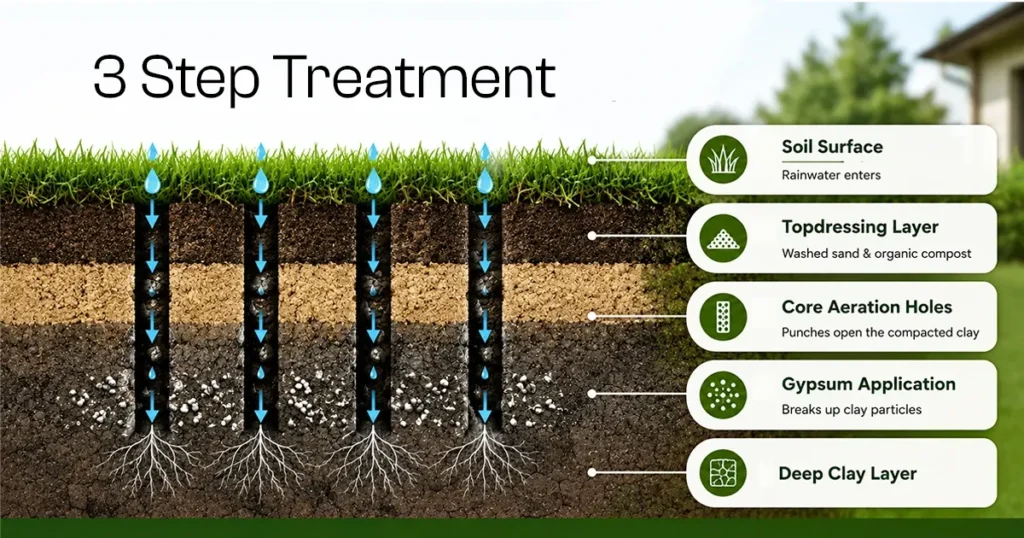
↓ (Rainwater enters)
↓ [Topdressing Layer] → Washed sand & organic compost
↓ [Core Aeration Holes] → Punches open the compacted clay
↓ [Gypsum Application] → Breaks up clay particles
[Deep Clay Layer] ───────────────────────────────────────
Step 1: Poke Holes (Aeration)
Aeration punches thousands of small holes into your lawn. This lets air, nutrients, and water reach the grass roots. If you have a severe waterlogged lawn in Auckland, do not use a standard garden fork. Pushing a fork into clay just squeezes the dirt sideways, which packs it even tighter.
Step 2: Spread Gypsum
Step 3: Add Sand
Why You Should Never Just Dump Dirt on a Soggy Lawn
Problem: Pouring new soil over hard clay creates a trap. Rainwater sinks straight through the loose new dirt, hits the hard clay underneath, and stops moving.
Result: Your lawn looks dry on top, but it turns into a hidden, mushy pudding underneath that rots your grass roots from below.
How to Fix: Always open up the hard clay underneath before you try to raise the lawn level.
Long-Term Prevention: Solutions for Next Winter
1. Gravel Trenches (French Drains)
2. Drainage Grates (Catch Pits)
Find the right fix for your waterlogged lawn in auckland
| What You See | The Cause | The Fix | Can I Do It Myself? |
|---|---|---|---|
|
Squishy grass, but no big puddles |
Squeezed surface dirt |
Poke holes and add gypsum |
Yes! Use a manual tool on the weekend. |
|
Puddles sit for up to a day after rain |
Packed dirt mixed with dead grass build-up |
Deep aeration and sand topdressing |
Yes! Requires a clear weekend and hard work. |
|
Large pools stay for over 2 days, green moss grows |
Heavy clay soil and bad ground slope |
Install gravel drains or reshape the lawn |
No, Requires council rules and expert tools. |
When Should I Hire a Professional Landscaper for Drainage Issues?
Auckland council laws are very strict about water. You cannot legally alter your land if it forces your backyard water to flood into your neighbor’s section. You also cannot hook up new private pipes into the public wastewater lines without official council permission.
Your lawn hides dangerous power cables, main water lines, and internet wires. Digging without a layout plan can cause a massive accident and leave you with huge repair bills if you hit a utility line.
Water only moves downhill. To lay a pipe correctly, you must calculate precise slopes. A tiny mistake in your measurements can cause rainwater to run backward, which aggregates the flooding and makes your lawn even muddier.
Fixing Your Auckland Yard for this winter
You do not need to spend your weekends digging muddy trenches or guessing where your underground pipes sit. If you want to stop tracking mud inside and need a safe, permanent fix, Garden Solution Landscapes can handle the job.