
Retaining Wall Installation in Auckland: What you should know before starting
Building a retaining wall is the best way to turn a sloping Auckland backyard into a flat, usable lawn. But before you hire a builder, you need to know the local council rules. Auckland’s heavy clay soil shifts easily, so the structural laws here are very strict. Skipping the proper planning steps for your retaining wall installation can lead to a collapsed wall or a heavy council fine.
1. Council Rules for Building
Whether you need official paperwork (a building consent) from the Auckland Council depends entirely on how tall your wall is and what sits on the ground above it.
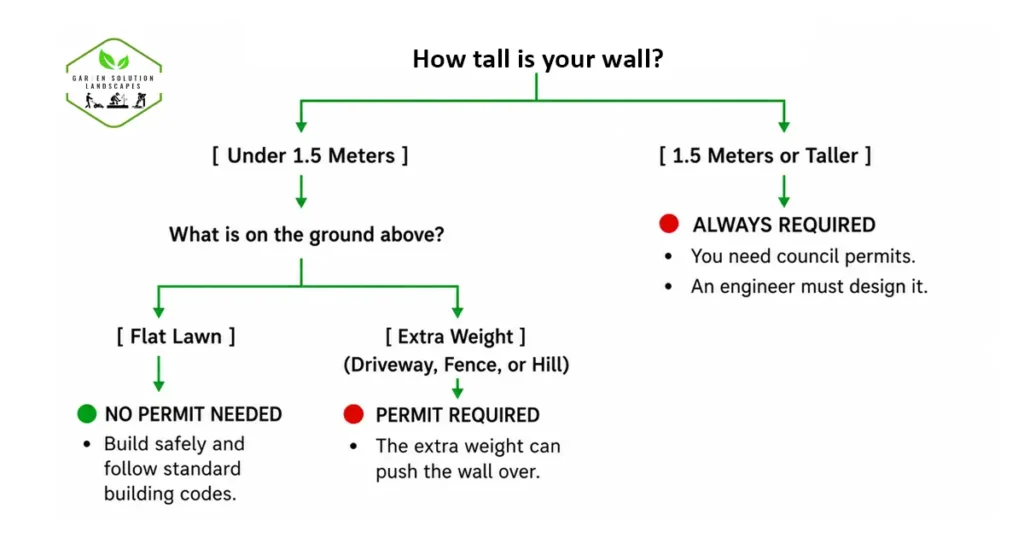
When You Do Not Need Council Paperwork
When You Must Get Council Paperwork
- The wall is 1.5 meters or taller.
- The wall holds up extra weight. This includes driveways, parking spaces, nearby buildings, a fence or a sloping hill sitting right above the wall.
Even if your project does not need paperwork, the wall must still be strong enough to meet the New Zealand Building Code. You can review what projects are exempt on the Ministry of Business, Innovation and Employment (MBIE) Building Performance Website.
2. Water and Land Rules
You will need extra council paperwork if your wall does any of these things:
- Blocks the natural way rainwater flows across your grass during a heavy storm.
- Means digging up and moving heaps of dirt that changes how water runs into the next yard.
- Sits on protected land, like right next to the beach, near native trees, or in a historic area.
If your wall is on protected land, you have to stop and wait until the council says it is okay to build. You can check what rules apply to your house by looking up your address on the Auckland Council Retaining Wall Guide.
3. Working with Experts
If your wall is tall or holds up a lot of weight, then you must hire professionals to design it.
Soil Specialists
These guys check the dirt in your yard to see how strong it is. This is a big deal in Auckland because clay dirt ruins walls easily.
- Sponge Effect: Rain turns clay into a giant sponge. It sucks up water, gets heavy, and pushes hard against the back of your wall. When it dries out, it shrinks and cracks. This constant shifting will easily snap a weak wall.
- Sliding Down: They find out where the solid, safe ground starts deep down. This stops your new wall from slowly sliding down the hill over time.
Structural Design Experts
While the soil guys check the dirt, these experts figure out how to build the actual wall so it doesn’t fall over. They tell you exactly how deep to dig the post holes, how thick the wood needs to be, and how much concrete to pour.
- Council Paperwork: They give you the official drawings you need to give to the Auckland Council to get your project approved.
- Final Check: Once the builders finish the job, the design expert looks at the wall one last time to make sure the posts and drainage pipes were put in exactly right.
4. Materials, Costs and How Long They Last
The material you pick changes your budget and how long your wall stays up. Here is a simple look at what it costs to buy materials and hire builders in Auckland:
| Material Type | Estimated Cost (per square meter) | How Long It Lasts in Auckland Clay | Best Use |
|---|---|---|---|
|
Treated Timber (Wood) |
$300 – $600
|
15 to 25 Years |
Most common and affordable choice for standard backyards. |
|
Interlocking Blocks |
$400 – $800 |
50+ Years |
Great for long-lasting walls under 1.5 meters high.
|
|
Concrete Blocks |
$600 – $1,000+ |
100+ Years |
Used for heavy jobs, driveways, and very tall walls. |
|
Rock Baskets (Gabions) |
$350 – $650 |
30 to 60 Years |
Excellent for drainage and looks like natural stone.
|
Tall Walls Cost Extra
5. Hidden Legal and Pipe Problems
Shared Properties (Cross-Leases)
Many Auckland homes share a property title with their neighbors. Even if your wall is small and does not need council paperwork, you still need written permission from your neighbors on the title. If you build without their permission, they can legally force you to pull the wall down.
Public Water Pipes
Public sewer and stormwater pipes run under many Auckland backyards. If your wall sits within 3 meters of a public pipe, then you must get special permission from Watercare before digging. They usually put a camera down the pipe before and after you build it to make sure you did not break it.
Safety Railings
National building safety rules state that you must prevent people from falling. If someone can fall 1 meter or more from the top of your new wall, then you must install a safety fence or railing on top.
Safety Railings and Timber Fencing
Take advantage of this step to put up your wood boundary fence. Because you are already clearing the ground and digging holes for the retaining wall, building the timber fencing at the same time saves time and cuts labor costs. Builders can also secure the fence posts right into the wall structure to make it much stronger.
6. Keeping Water Out (Drainage)
Water destroys most walls in Auckland, not the weight of the dirt alone. Wet clay gets incredibly heavy. So you must install a proper drainage system behind the wall to let water escape.
[Wet Clay Dirt] ──> [Cloth Filter] ──> [Small Rocks] ──> [Plastic Drain Pipe] ──> [Public Drain]
Plastic Drain Pipes
You must place a plastic pipe with small holes in it at the very bottom of the wall before filling the gap with dirt. It collects pooling water and carries it away.
Small Drainage Rocks
You must fill the space directly behind the wall with clean gravel or scoria rocks. This allows rainwater to drop straight down to your drain pipe instead of soaking into the dirt.
Cloth Filters (Geotextile Fabric)
You must place a layer of special cloth between the clay dirt and your drainage rocks. This cloth stops tiny clay particles from washing into the rocks and blocking your pipe over time.
Where the Water Goes
You cannot wash your dirt and water into your neighbor’s yard. You must connect your wall pipe directly into an approved council stormwater drain.
Ready to Fix Your Yard?
Whether you need a simple wooden wall to level out your lawn or a large concrete block wall, we take care of the hard work. We handle everything from the council paperwork to digging the holes and installing the pipes.
Let’s look at your yard, talk about the best materials and give you a clear, honest price estimate for your project.
Frequently Asked Questions
If your wall is under 1.5 meters high and carries no extra weight on top, then you generally do not need a building consent. But if the project involves a retaining wall installation that is 1.5 meters or taller, or if it holds up a driveway, slope or building, then a council building consent is always required.
You must stay outside the “zone of influence” of the house foundations. If you plan a retaining wall installation too close to an existing building, then the weight of the house will push down on the structure. So you must hire a structural engineer to design deeper piles to protect the home.
Only if it requires a building consent. If the retaining wall installation is complex enough to need a consent, then it becomes restricted building work. After that, it must be designed by an engineer and built by a Licensed Building Practitioner (LBP).
Yes, but you have to be very careful with the extra weight. The fence acts as a “surcharge” load because the wind pushes against it. If you bolt a fence right to the top of an unconsented wall, then the retaining wall installation might instantly fail and require council intervention.
Treated timber poles usually last between 15 and 25 years. However, Auckland clay holds onto water for a long time. So if your drainage is poorly handled during the retaining wall installation, then the wet soil can rot the timber much faster.
Yes, but it depends entirely on who benefits from the structure. If the retaining wall installation is only there to level out your lawn, then you are responsible. Before you dig, it is best to get any shared cost agreements in writing.